CTSI supplement awardee receives new $100,000 Genentech grant to advance Alzheimer’s research
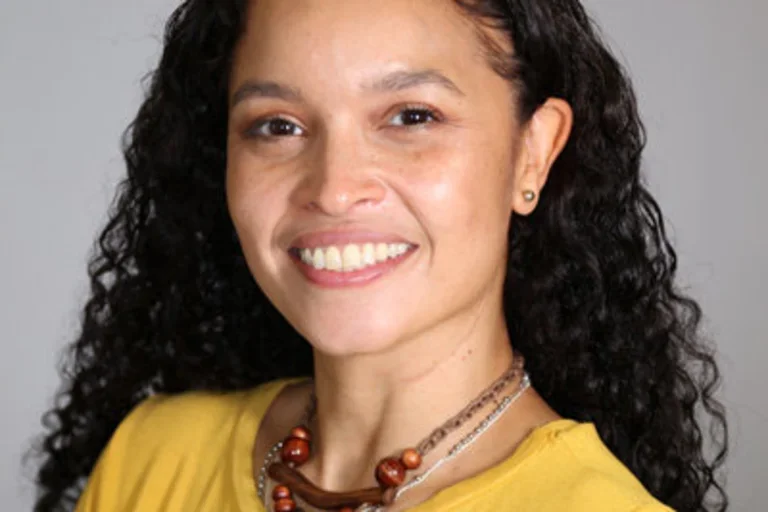
Mirella Diaz-Santos, PhD, assistant professor in the departments of Neurology and Psychiatry & Behavioral Sciences at the David Geffen School of Medicine, and a UCLA Clinical and Translational Science Institute (CTSI) supplement awardee, has received a new honor advancing her growing body of community‑engaged Alzheimer’s research. She was recently awarded $100,000 from leading bio-technology company Genentech to begin early implementation of the proposed TRUST‑AD (Training for Recruitment Using Simulation to Build Trust in Alzheimer’s Disease Pharma Trials) intervention, a key component of her National Institute on Aging K23 career development application.
Dr. Diaz-Santos’ work focuses on increasing equity, trust, and inclusive participation in Alzheimer’s disease and related dementias (ADRD) research, particularly among Latino/a/x communities and older adults who remain underrepresented in clinical trials. Her research portfolio is anchored by two major efforts: the Culturally Led Approaches for Research Outreach (CLARO) study, supported by a CTSI/NCATS Supplement, and the proposed TRUST‑AD initiative.
Ongoing support from CTSI was fundamental in positioning both projects for competitive review. “Support from the CTSI was critical to advancing both the CLARO study and the submission of the TRUST‑AD K23,” she said. “CTSI services helped address a key translational barrier by guiding how to design and position community-engaged research so that it is scientifically competitive and aligned with national priorities focused on equity, feasibility, and real-world impact.”
In particular, Dr. Diaz-Santos worked closely with the CTSI Community Engagement and Research Program (CERP) to refine the framing and translational narrative of her proposals. She collaborated with her mentor, Arleen Brown, MD, PhD, co‑director of the CTSI and CERP Program, to ensure that both submissions were fully aligned with translational science goals and that they integrated community-engaged methods for research.
In addition, she also utilized CTSI grant support services from the Grants Submission Unit (GSU). GSU Project Manager, Jordan Whetstone, provided invaluable guidance on study design, implementation strategies, and communication of community‑engaged methods.
The new Genentech award will allow Dr. Diaz-Santos to begin piloting core elements of TRUST‑AD before the K23 review is complete. Early activities will include refinement of simulation-based communication training, development of performance-based fidelity tools, and feasibility testing in real-world ADRD research settings. “This pilot supports early refinement of the TRUST‑AD intervention and provides momentum, workforce engagement, and early translational impact,” Dr. Diaz-Santos said in describing the award’s significance.
Findings from the CTSI‑supported CLARO study (“focused on culturally and linguistically grounded education, infographics, and communication strategies”) will directly inform TRUST‑AD’s next phase. “Community engagement and trust-building should not be treated as supplemental activities. When they are embedded from the beginning, they strengthen rigor, feasibility, and translational impact,” she said. “Institutional resources like CTSI provide the mentorship, grant development support, and scientific guidance that help equity-focused ideas become scalable and field-shaping contributions to science.”
Image source: UCLA Health