Dr. Arjun Deb's drug development methods exemplify translational science
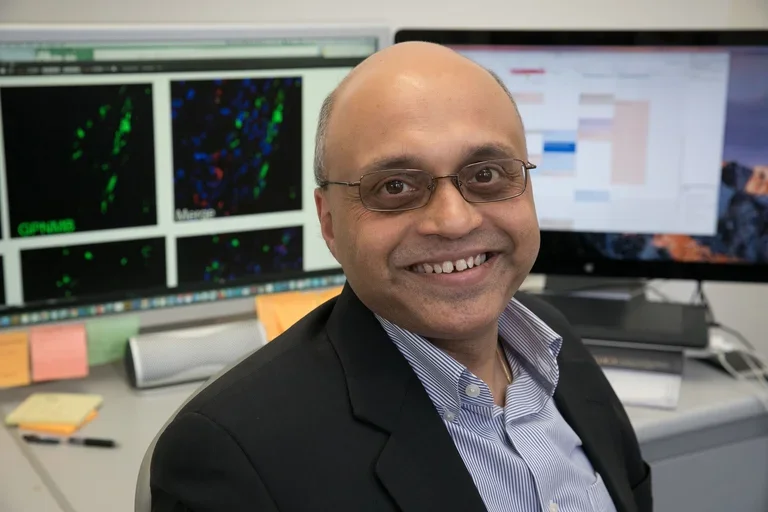
Many faculty within UCLA are exhibiting translational science in their work, with one laudable example being Dr. Arjun Deb of the Department of Medicine (Cardiology) and Molecular Cell and Developmental Biology. As highlighted by the UCLA Newsroom, Dr. Deb developed a drug to block a protein that limits heart healing following a cardiac attack and did so solely through federal and state grants rather than relying on industry sponsored funding.
According to the National Center for Advancing Translational Sciences (NCATS), translational science generates scientific and operational innovations that overcome longstanding challenges along the translational research pipeline, which can include scientific, operational, financial, and administrative innovations that transform the way that research is done, making it faster, more efficient, and more impactful.
Dr. Arjun Deb and his lab modelled this concept, starting with the basic science biology of heart failure and tissue repair, through which they identified a gene target: ENPP1. Preclinical models then confirmed the importance of ENPP1 as a target for enhancing tissue repair in the heart and other organs. Considering these observations, they engineered a drug, a humanized monoclonal antibody targeting ENPP1, that can be applied for heart disease and organ failure.
This research accomplishment was made possible initially through a seed grant received in 2018, offered by the UCLA David Geffen School of Medicine (DGSOM) and funded by the CTSI, entitled “Using stem cell modeling and optical approaches to identify therapeutic strategies for heart failure.” This seed grant funding helped Dr. Deb and his lab to perform initial experiments and generate the preliminary data necessary for the grant submissions that propelled the research program. The CTSI also contributed to these research efforts. Dr. Deb reports, “CTSI has been instrumental in providing us translational drug development and innovation awards as well as providing expertise in terms of in-house consultants and other experts for drug development.”
The most recent milestone in Dr. Deb’s research is the development of a drug, AD-NP1, that has been approved by the FDA for first-in-human studies. “This was entirely developed at UCLA and CTSI played a pivotal role in this accomplishment, especially early on when there were not a lot of funding agencies willing to bet on us,” Dr. Deb says.
Dr. Deb’s work is the ideal example of translational science and research in practice, and the CTSI as a whole is pleased to have played a part in ensuring that his potentially groundbreaking drug has now reached the point of first-in-human studies.
Photo source: UCLA Health
Related Articles